Embarking on the journey of wedding planning often brings joy, but the task of finalizing your guest list can present a unique set of emotional hurdles. Navigating the delicate balance between honoring relationships and adhering to your vision and budget requires thoughtful consideration and strategic planning. This guide is designed to empower you with the tools and insights needed to approach this significant decision with confidence and clarity.
We will explore the emotional landscape surrounding guest list creation, providing practical strategies to manage feelings of obligation and establish healthy boundaries. Furthermore, we will delve into establishing clear criteria for your guest list, ensuring that each decision aligns with your wedding’s core vision and financial realities. By understanding how to navigate difficult conversations and leverage practical tools, you can move towards a finalized list that reflects your heartfelt desires, allowing you to celebrate your special day with those who matter most.
Understanding the Emotional Landscape of Guest List Creation
Finalizing your wedding guest list is often one of the most emotionally charged aspects of wedding planning. It’s a process that extends beyond simple logistics; it delves into relationships, family dynamics, and personal desires. Navigating these feelings with grace and intention is crucial for a harmonious planning experience and a wedding day that truly reflects your vision.This section explores the common emotional hurdles couples encounter and provides actionable strategies to address them, ensuring your guest list is a source of joy, not stress.
We will examine how to identify external pressures, establish healthy boundaries, and foster open communication with your partner to make these important decisions collaboratively.
Common Emotional Challenges in Guest List Creation
Couples frequently grapple with a range of emotions when compiling their guest list. These can include feelings of guilt, obligation, anxiety, and even excitement. Understanding the root of these emotions is the first step toward managing them effectively.
- Guilt: This often arises from the fear of offending individuals or families by not inviting them, especially if there’s a perception of obligation or a desire to please everyone.
- Obligation: Societal expectations, family traditions, or a sense of duty can lead couples to feel compelled to invite people they might not otherwise choose, such as distant relatives or acquaintances.
- Anxiety: The pressure to adhere to budget constraints, venue capacity, or simply the overwhelming nature of managing numerous relationships can create significant stress.
- Excitement: Conversely, the joy of celebrating with loved ones is a powerful motivator, and the challenge lies in balancing this excitement with practical limitations.
Strategies for Identifying and Addressing Feelings of Obligation or Pressure
Recognizing when you or your partner are feeling pressured is key to making authentic decisions. External influences can manifest in subtle or overt ways, and developing a keen awareness is essential.It is important to identify the sources of these feelings. Are they coming from parents, extended family, or societal expectations? Once identified, couples can work together to develop a unified front and a set of guiding principles for their guest list decisions.
- Acknowledge the Source: Discuss openly where the feelings of obligation are originating. Is it a direct request, a subtle hint, or an assumed expectation?
- Define Your “Why”: Revisit your core reasons for getting married and the kind of wedding experience you envision. This personal vision can serve as a compass when faced with external pressures.
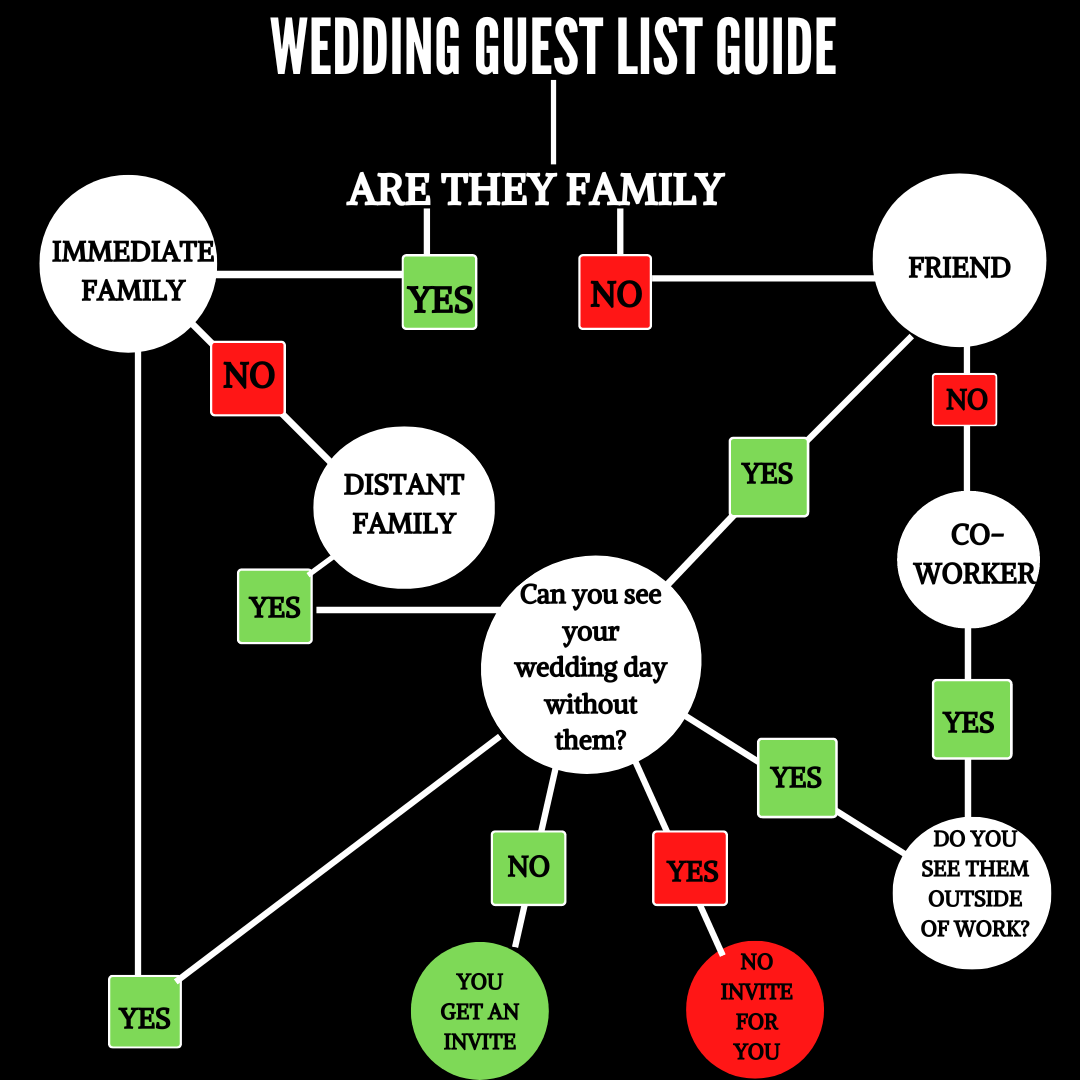
- Categorize Your Guests: Mentally or physically categorize potential guests. This can help differentiate between those you genuinely want to celebrate with and those you feel obligated to invite. Categories might include:
- Immediate Family
- Closest Friends
- Extended Family (close ties)
- Extended Family (more distant ties)
- Friends from work/hobbies
- Acquaintances
- Set a Guest Count Goal: Having a target number, even a flexible one, provides a tangible limit that can help justify decisions when faced with pressure.
Methods for Setting Personal Boundaries Throughout the Guest List Process
Establishing clear boundaries is vital to protecting your vision for the wedding and maintaining your peace of mind. Boundaries are not about being unkind; they are about defining what is manageable and authentic for you as a couple.These boundaries should be communicated clearly and consistently, both to each other and to external parties. This proactive approach can prevent misunderstandings and minimize future conflicts.
- The “Plus-One” Policy: Decide on a consistent policy for plus-ones. For example, only married couples or those in long-term, live-in relationships receive a plus-one.
- The “Plus-Kid” Policy: Determine if children will be invited. Some couples opt for an adults-only wedding, while others welcome families. Communicate this clearly on invitations.
- The “Invitation Address” Rule: Address invitations only to the specific individuals you intend to invite. Avoid writing “and guest” unless a plus-one is explicitly intended.
- The “No Uninvited Guests” Stance: Firmly, but politely, decline requests for additional guests not on the original invitation.
- The “No Social Media Announcements” Approach: Avoid posting guest list details or counts on social media, which can invite speculation or requests.
The Importance of Open Communication with Your Partner Regarding Guest List Decisions
Your partner is your most important ally in this process. Open, honest, and consistent communication is the bedrock of making guest list decisions that you both feel good about.This dialogue should be ongoing, allowing for shared understanding, compromise, and mutual support. When you are on the same page, navigating external pressures becomes significantly easier.
“The guest list is a reflection of your shared journey. Make decisions together, support each other, and remember that this is your celebration.”
- Schedule Dedicated Time: Set aside regular times to discuss the guest list, free from distractions. This ensures both of you have equal opportunity to voice your thoughts and concerns.
- Listen Actively and Empathetically: Understand your partner’s perspective, even if it differs from your own. Acknowledge their feelings and validate their concerns.
- Define Your “Must-Haves”: Each of you should identify the key people you absolutely want present. This forms the core of your guest list.
- Discuss Compromises: Be prepared to compromise. If one partner feels strongly about inviting a particular person, explore ways to accommodate this without compromising your overall vision or budget.
- Present a United Front: Once decisions are made, present a unified front to family and friends. This reinforces that the choices are a joint decision.
Establishing Clear Criteria for Your Guest List
Creating a wedding guest list can feel like navigating a minefield of emotions and obligations. To move forward with clarity and confidence, it’s essential to establish a robust framework for deciding who makes the cut. This involves defining what truly matters for your special day and aligning your guest list with your overall wedding vision and budget. By implementing clear criteria, you can transform a potentially overwhelming task into a manageable and strategic process.The foundation of a well-defined guest list lies in understanding the core elements of your wedding.
Consider the size and style of the event you envision. Are you dreaming of an intimate gathering or a grand celebration? Your budget will also play a significant role, as each guest represents a cost in terms of catering, favors, and seating. By proactively addressing these factors, you can create a more objective and less emotionally charged decision-making process.
Defining “Must-Have” vs. “Nice-to-Have” Guests
To effectively manage your guest list, it’s beneficial to differentiate between those who are absolutely essential to your celebration and those whose presence would be a welcome addition but not critical. This distinction helps prioritize and manage numbers when constraints become a factor.A helpful approach is to consider immediate family and your closest friends as your “must-have” guests. These are individuals who have played significant roles in your lives and whose presence you cannot imagine your wedding day without.
“Nice-to-have” guests, on the other hand, might include extended family, colleagues, or friends from various stages of your life whose inclusion would be appreciated but doesn’t fundamentally alter the core of your celebration.
The “must-have” list forms the bedrock of your guest count, while the “nice-to-have” list offers flexibility for expansion within your defined parameters.
Evaluating Potential Guests Against Wedding Vision and Budget
Every potential guest should be thoughtfully considered in relation to your wedding’s overall vision and financial limitations. This involves asking specific questions to ensure alignment.Consider the following evaluation points:
- Relationship Closeness: How significant is this person’s relationship to you as a couple?
- Wedding Impact: How will their presence contribute to the atmosphere and intimacy of your wedding?
- Budget Alignment: Can you accommodate this guest within your current budget for catering, invitations, and other per-person costs?
- Vision Consistency: Does inviting this guest align with the overall style and size of the wedding you envision?
- Reciprocity: Have they invited you to their wedding or significant life events? While not a strict rule, this can be a gentle consideration.
For example, if you’re planning a small, intimate elopement, inviting a large group of distant acquaintances might detract from the desired atmosphere and significantly exceed your budget. Conversely, for a large, celebratory reception, including a wider circle of friends and family might be more appropriate.
Categorizing Guests Based on Relationship Closeness and Wedding Impact
Organizing your potential guests into distinct categories can provide a clear visual representation of your relationships and their relevance to your wedding day. This structured approach helps in making impartial decisions.You can categorize guests using a tiered system:
- Tier 1: Immediate Family & Closest Friends: These are your absolute core group – parents, siblings, your wedding party, and your most cherished friends. Their presence is non-negotiable.
- Tier 2: Close Extended Family & Dearest Friends: This tier includes grandparents, aunts, uncles, cousins with whom you have a strong bond, and close friends you see regularly or who have been a significant part of your lives.
- Tier 3: Extended Family & Friends: This tier comprises other relatives, friends from work, childhood friends you’ve lost touch with, or acquaintances. These are the guests you might consider if your budget and venue capacity allow.
- Tier 4: Plus-Ones: Decisions about plus-ones should be made consistently. Typically, married couples, engaged couples, or those in long-term committed relationships are offered a plus-one. For single guests, consider your venue capacity and budget before automatically extending this option.
The wedding impact of a guest can also be considered within these tiers. A Tier 1 guest will undoubtedly have a high wedding impact due to their close relationship. For Tier 3 guests, their impact might be lower, making them easier to manage if you need to reduce numbers.
Creating a Tiered Guest List for Effective Number Management
A tiered guest list is a powerful tool for managing your wedding numbers and making difficult decisions with greater ease. It allows you to prioritize who you absolutely want there while having a clear plan for who to invite if space and budget permit.Here’s how to implement a tiered system:
| Tier | Description | Inclusion Strategy | Example |
|---|---|---|---|
| Tier 1 (Core) | Immediate family, fianc(e)’s immediate family, wedding party, best friends. | Always include. These are your non-negotiables. | Parents, siblings, maid of honor, best man. |
| Tier 2 (Close Circle) | Grandparents, aunts, uncles, cousins with strong bonds, close friends you see regularly. | Include if possible. Aim to fill your ideal guest count with this tier. | Favorite aunt and uncle, college best friends. |
| Tier 3 (Extended Circle) | Other relatives, long-time colleagues, friends from specific life phases, acquaintances. | Invite if space and budget allow after Tiers 1 and 2 are accommodated. | Work colleagues, childhood friends you haven’t seen in years. |
| Tier 4 (Plus-Ones) | Committed partners of guests in Tiers 1-3. | Apply consistently based on relationship status and your overall guest count. | Spouses, fianc(e)s, long-term partners. |
This structured approach ensures that you prioritize your most important relationships first. If you find yourself needing to reduce your guest count, you will know precisely which tier to draw from, making the process less personal and more strategic. For instance, if your initial Tier 1 and 2 lists bring you to 100 guests, and your venue capacity is 120, you can then move to Tier 3 to fill the remaining spots.
If, however, your budget dictates a maximum of 80 guests, you would stop after fully accommodating Tier 2, and perhaps only include a select few from Tier 3 if absolutely necessary.
Navigating Difficult Guest List Decisions

Crafting your wedding guest list is a deeply personal journey, and it’s common to encounter challenging situations that require careful consideration and thoughtful communication. This section will guide you through some of these common hurdles, offering strategies to manage requests, communicate your decisions with grace, and address the inevitable feelings of guilt that can arise.
Handling Requests from Individuals Not Initially on the List
When individuals not on your initial guest list reach out to inquire about attendance or express a desire to be included, it’s important to have a prepared and consistent approach. This ensures fairness and avoids creating a precedent that could lead to further complications.
- Acknowledge and Validate: Begin by acknowledging their interest and expressing your appreciation for their desire to celebrate with you. Phrases like “Thank you so much for reaching out and for your excitement about our wedding!” can be a good starting point.
- Reiterate Your Constraints: Gently remind them of the limitations you are working under. This could be venue capacity, budget, or the intimate nature of the celebration you envision. For example, “As we’ve had to make some difficult decisions due to venue capacity, we’ve had to keep our guest list very limited.”
- Offer Alternative Celebrations: If appropriate and feasible, suggest alternative ways to celebrate with them. This could include a casual get-together before or after the wedding, or a special dinner at a later date. “We would love to celebrate with you in a more relaxed setting after the wedding. Perhaps we could plan a dinner with you and [partner’s name] soon after we return from our honeymoon?”
- Maintain Consistency: It is crucial to apply your guest list criteria consistently to all requests. If you make an exception for one person, it can lead to disappointment and awkwardness for others.
Communicating Final Guest List Decisions with Grace and Honesty
The way you communicate your final guest list decisions significantly impacts how they are received. Honesty, coupled with empathy and clear boundaries, is key to maintaining positive relationships.
When informing someone that they will not be able to attend, the delivery of the message is as important as the message itself. A direct yet kind approach is best, avoiding ambiguity that could lead to further misunderstandings.
- Be Direct but Kind: Avoid vague language or making excuses. State clearly that you are unable to accommodate them at the wedding. “We’ve had to make some very difficult decisions regarding our guest list due to our venue’s capacity, and unfortunately, we won’t be able to extend an invitation to everyone we’d love to celebrate with.”
- Express Regret Sincerely: Convey genuine regret that they cannot be included. “We are so sorry that we can’t have everyone there with us on the day.”
- Focus on the Positive (if applicable): If you have a strong relationship, you can express your desire to connect with them at another time. “We’re looking forward to seeing you soon and celebrating our marriage in other ways.”
- Avoid Over-Explaining: While honesty is important, you do not need to provide a detailed justification for every decision. This can open the door to arguments or attempts to negotiate.
- Empower Your Partner: Ensure you and your partner are on the same page and present a united front when communicating decisions.
Common Scenarios Causing Guilt and Specific Responses
Guilt often stems from perceived obligations or a desire to please everyone. Identifying these common scenarios and having pre-prepared responses can help you navigate these feelings effectively.
Obligation Invites (e.g., distant relatives, colleagues)
Inviting people out of a sense of obligation, rather than genuine desire, is a frequent source of guilt. Remember that your wedding is a celebration of your union, and inviting only those who are integral to your lives is a valid choice.
“While we appreciate [person’s name]’s connection to our families/workplace, we’ve made the difficult decision to keep our wedding guest list very intimate, focusing on our closest friends and immediate family. We hope to connect with them in a more casual setting soon.”
Friends of Parents
Parents may wish to invite their friends, which can complicate the guest list. It’s important to have a clear conversation with your parents about your vision for the wedding and any guest list limitations.
“We understand you’d love to share this special day with your friends. However, to keep our guest list manageable and within our budget, we’ve had to prioritize invitations for our closest family and friends. We’d be delighted to celebrate with your friends at a separate event or share photos and stories with them afterwards.”
Children of Guests
Deciding whether to invite children can be a sensitive issue. If you choose an adults-only wedding, be prepared for potential pushback.
“We’ve decided to make our wedding an adults-only occasion to allow all our guests to relax and enjoy the festivities. We hope you understand and can still make arrangements to attend. We’d be happy to recommend local babysitting services if that would be helpful.”
Managing Plus-One Requests and Their Implications
Plus-one requests can significantly impact your guest count, budget, and seating arrangements. Establishing a clear policy upfront is essential.
Your plus-one policy should be determined by your overall guest list strategy, budget, and venue capacity. Consider the following approaches and their implications.
- Assign Plus-Ones Strategically: A common approach is to offer plus-ones to guests who are married, engaged, or in long-term, committed relationships. This can be communicated by addressing the invitation to both individuals or by stating “and Guest” only for those who qualify.
- No Plus-Ones for Single Guests: For single guests, you can choose not to offer a plus-one. This is often easier to enforce if it’s a blanket policy.
- Set a Firm Cut-off: Decide on a cut-off date for plus-one requests. After this date, no further additions will be made to the guest list.
- Consider the Financial Impact: Remember that each additional guest incurs costs for catering, favors, and potentially accommodation. Factor this into your budget before agreeing to any plus-one requests.
- Communicate Clearly on Invitations: The invitation itself is the primary tool for communicating your plus-one policy. If an invitation is addressed to a specific person, it signifies that no plus-one is included. For example, “Mr. John Smith” implies only John is invited, whereas “Mr. John Smith and Ms.
Jane Doe” or “Mr. John Smith and Guest” clearly indicates an additional person.
Practical Tools and Techniques for Finalization

Once you have navigated the emotional landscape and established clear criteria, the next crucial step involves employing practical tools and systematic techniques to finalize your wedding guest list. This phase is about transforming your decisions into actionable steps, ensuring a smooth and guilt-free conclusion to your guest list creation process. By leveraging organized templates and structured procedures, you can confidently move forward with your wedding plans.This section will guide you through specific methods and tools designed to bring clarity and efficiency to the final stages of guest list management.
From detailed tracking to visual aids, these techniques are crafted to support your decisions and maintain organization throughout.
Guest List Tracker Template Design
A well-designed guest list tracker is an indispensable tool for managing RSVPs, dietary requirements, and other essential guest information. It serves as a central hub for all guest-related data, allowing for easy reference and efficient communication. Creating a template that captures key details ensures that no aspect of guest management is overlooked.A comprehensive guest list tracker template should include the following essential columns:
- Guest Name (Primary and Plus One, if applicable)
- Relationship to Couple (e.g., Bride’s Family, Groom’s Friend, Colleague)
- Contact Information (Phone Number, Email Address)
- Mailing Address (for invitations)
- Invitation Sent Date
- RSVP Status (e.g., Pending, Accepted, Declined, Not Responded)
- Number of Guests Attending
- Dietary Needs/Allergies (e.g., Vegetarian, Vegan, Gluten-Free, Nut Allergy)
- Accommodation Needs (if applicable)
- Gift Received (optional, for tracking thank-you notes)
- Notes (any specific requests or important information)
This structured approach allows for quick filtering and sorting, making it easy to identify who has responded, who needs follow-up, and any specific guest needs that require attention from your venue or caterer.
Step-by-Step Guest List Review and Trimming Procedure
Systematically reviewing and trimming your guest list is a critical process that requires patience and adherence to your established criteria. This procedure helps ensure that your final list aligns with your wedding vision, budget, and venue capacity. Following these steps will provide a clear path to finalizing your guest list without unnecessary stress.The following step-by-step procedure is recommended for a thorough review and trimming process:
- Initial Review Against Criteria: Revisit your established criteria (e.g., close family, lifelong friends, individuals you’ve met recently). Go through your preliminary list and flag any guests who may not meet these core requirements.
- Capacity Check: Compare the current number of guests against your venue’s maximum capacity and your desired guest count. Identify the number of guests you need to remove if you are over capacity.
- Prioritization Sorting: Group guests into priority tiers based on your established criteria and the number of spots available. Tier 1 might be immediate family, Tier 2 close friends, Tier 3 extended family or family friends, and so on.
- “Maybe” List Consolidation: Review any guests who were initially placed on a “maybe” list. Make definitive decisions for these individuals based on your remaining capacity and the importance of their presence.
- Plus-One Evaluation: Systematically review each plus-one invitation. Ensure that plus-ones are extended consistently and in line with your wedding’s policies (e.g., only for married couples or those in long-term relationships).
- Second Round of Trimming: If further trimming is necessary, focus on the lower priority tiers. This is often the most challenging part, and it’s where referring back to your criteria is essential to make objective decisions.
- Final Count Verification: Once you believe the list is finalized, do a final count to ensure you are within your desired guest number and venue capacity.
- Save and Lock: Save your final guest list in your tracker and consider it “locked.” This helps prevent further additions or subtractions that can arise as the wedding date approaches.
Guest Prioritization Methods
Prioritizing guests is essential when your wedding’s capacity or desired atmosphere necessitates making difficult choices. This process involves ranking individuals based on their significance to you and your partner, ensuring that those who are most important are included within your constraints. Effective prioritization helps maintain the intimacy and intended feel of your celebration.Methods for prioritizing guests include:
- Tiered System: As mentioned in the trimming procedure, categorizing guests into tiers (e.g., Tier 1: Immediate Family, Tier 2: Closest Friends, Tier 3: Extended Family/Distant Friends) allows for a structured approach to selection. You can fill your available spots by working down from the highest tier.
- “Who Would You Miss Most?” Exercise: This exercise involves each partner independently listing the top 10-20 people they absolutely cannot imagine their wedding day without. Comparing these lists can highlight shared priorities and individuals who are universally important.
- Relationship Longevity and Depth: Consider the length and depth of your relationships. Long-standing friendships and familial bonds often hold a higher priority than more recent acquaintances.
- Impact on Your Wedding Day: Think about who will contribute most positively to the atmosphere and joy of your wedding day. This could include individuals who are particularly supportive, fun-loving, or whose presence would be deeply meaningful.
- “Wedding Weekend” Guest List: If you are hosting pre- or post-wedding events, consider a slightly larger guest list for those occasions, allowing for more relaxed gatherings with a broader circle of friends and family.
“The guest list is a reflection of the love and support surrounding your union. Prioritize those who have been instrumental in your journey and will celebrate your future with genuine joy.”
Using a Venn Diagram for Guest Grouping
A Venn diagram can be a highly effective visual tool for understanding and grouping your guests based on various criteria, especially when you have overlapping circles of influence or relationships. This method helps to visualize the composition of your guest list and can assist in making informed decisions, particularly when considering plus-ones or family dynamics.To utilize a Venn diagram for guest list finalization, consider the following:
Imagine two or three overlapping circles, each representing a distinct category. For instance, you might have one circle for “Bride’s Family & Friends,” another for “Groom’s Family & Friends,” and perhaps a third for “Mutual Friends.”
Steps to employ a Venn diagram:
- Define Your Circles: Clearly label each circle with the criteria you are using for grouping (e.g., Bride’s Side, Groom’s Side, Shared Connections, Family, Friends, Colleagues).
- Populate Each Section: Place the names of your guests into the appropriate sections of the diagram. A guest might fall into one circle, two, or even all three, depending on the criteria.
- Analyze Overlaps: The overlapping sections represent guests who are connected to both partners or fall into multiple categories. These individuals are often high-priority guests.
- Identify Unique Segments: The sections that do not overlap represent guests who are primarily connected to one side or one specific category.
- Decision Support: By visually seeing the distribution, you can identify areas where you might have a disproportionate number of guests from one side, or where mutual friends can help balance the guest count. This visual representation can also highlight individuals who might be known to one partner but not the other, prompting discussions about their inclusion.
For example, if you have a circle for “Family” and a circle for “Friends,” the overlap would represent individuals who are both family members and close friends. This can be a powerful way to identify individuals who hold significant importance from multiple perspectives.
Maintaining Peace and Unity During the Process
Creating a wedding guest list is often a journey filled with both excitement and, at times, delicate negotiations. To navigate this, it’s crucial to foster an environment of peace and unity between partners, ensuring that the process strengthens your relationship rather than strains it. A united front not only makes the decision-making smoother but also presents a clear and consistent message to family and friends.The guest list is one of the first significant decisions you’ll make together as a couple for your wedding.
Approaching it as a team, with open communication and mutual respect, is paramount. This shared commitment to a unified decision-making process will serve as a strong foundation for handling any subsequent challenges that may arise.
The Significance of a United Front Between Partners
A united front between partners during guest list discussions is vital for several reasons. It signifies that you are a team, making decisions that reflect your shared vision for the wedding. When both partners present a consistent perspective, it minimizes opportunities for external pressures or conflicting advice to create discord. This solidarity reassures both of you that you are navigating this process together, valuing each other’s input and prioritizing your relationship.
“A united front in guest list decisions is the bedrock of a harmonious wedding planning experience.”
Delegating Guest List Discussions to Trusted Individuals
While the ultimate decisions rest with the couple, there may be instances where seeking input or delegating specific discussions to trusted individuals can be beneficial. This is particularly true when dealing with complex family dynamics or when one partner feels overwhelmed. Carefully selecting individuals who understand your priorities and can offer objective advice, such as a wedding planner or a very close, neutral friend, can help alleviate stress and facilitate smoother conversations.It is important to approach delegation with clear boundaries and expectations.
Define what aspects of the guest list discussion can be shared and what remains strictly between the couple. This ensures that your core decisions are protected while still leveraging external support when needed.
Long-Term Benefits of Difficult but Necessary Guest List Decisions
Making difficult but necessary guest list decisions may feel challenging in the moment, but it offers significant long-term benefits for your wedding and your marriage. By establishing clear boundaries and adhering to your chosen criteria, you set a precedent for responsible decision-making. This can prevent future misunderstandings or feelings of obligation that could arise from extending invitations beyond your initial scope.Ultimately, these decisions contribute to a wedding that is more intimate, manageable, and financially feasible, allowing you to focus on celebrating your union with the people who are most integral to your lives.
It reinforces the understanding that your wedding is a reflection of your immediate family and closest connections.
Shifting Focus to Celebrating with Those Present
A powerful technique for maintaining peace and unity is to consciously shift your focus from who is “in” or “out” of the guest list to celebrating with those who are present. Once the list is finalized, embrace the joy and excitement of the guests who will be sharing your special day. This perspective shift allows you to fully appreciate the love and support surrounding you, rather than dwelling on potential exclusions.To cultivate this positive outlook, consider these approaches:
- Curate Meaningful Experiences: Plan activities and moments during the wedding that are designed to engage and delight your guests, fostering a sense of shared celebration.
- Express Gratitude: Make a conscious effort to thank your guests for their presence and support. Acknowledging their role in your day amplifies the positive atmosphere.
- Focus on Your Partnership: Remember that the wedding is fundamentally about your commitment to each other. The presence of your loved ones is a wonderful addition, but the core of the celebration is your union.
- Visualize the Celebration: Spend time imagining the joy and happiness of your wedding day with your chosen guests. This mental exercise can help reinforce the positive aspects of your finalized list.
By actively practicing these techniques, you can ensure that the guest list process, even with its challenges, ultimately contributes to a more peaceful and joyous wedding experience.
Final Wrap-Up
Ultimately, the process of finalizing your wedding guest list is an opportunity for couples to deepen their connection and solidify their shared vision for their future. By addressing the emotional complexities, establishing clear criteria, and employing effective communication and practical techniques, you can navigate this often-challenging aspect of wedding planning with grace and conviction. Remember, the goal is to create a celebration that authentically represents your love and commitment, surrounded by your most cherished companions, ensuring peace and unity as you move forward into married life.