How to Assemble and Mail Your Invitations is your comprehensive guide to creating and sending out your important correspondence with confidence and style. This detailed walkthrough will equip you with all the knowledge needed to transform individual components into a polished invitation suite, ready for its journey to your esteemed guests.
From meticulously selecting the right stationery and adhesives to mastering the art of addressing envelopes and ensuring correct postage, every step of the process is covered. We delve into practical techniques for assembly, address common challenges, and provide a clear roadmap for timely mailing, ensuring your invitations arrive beautifully and on schedule.
Gathering Necessary Materials
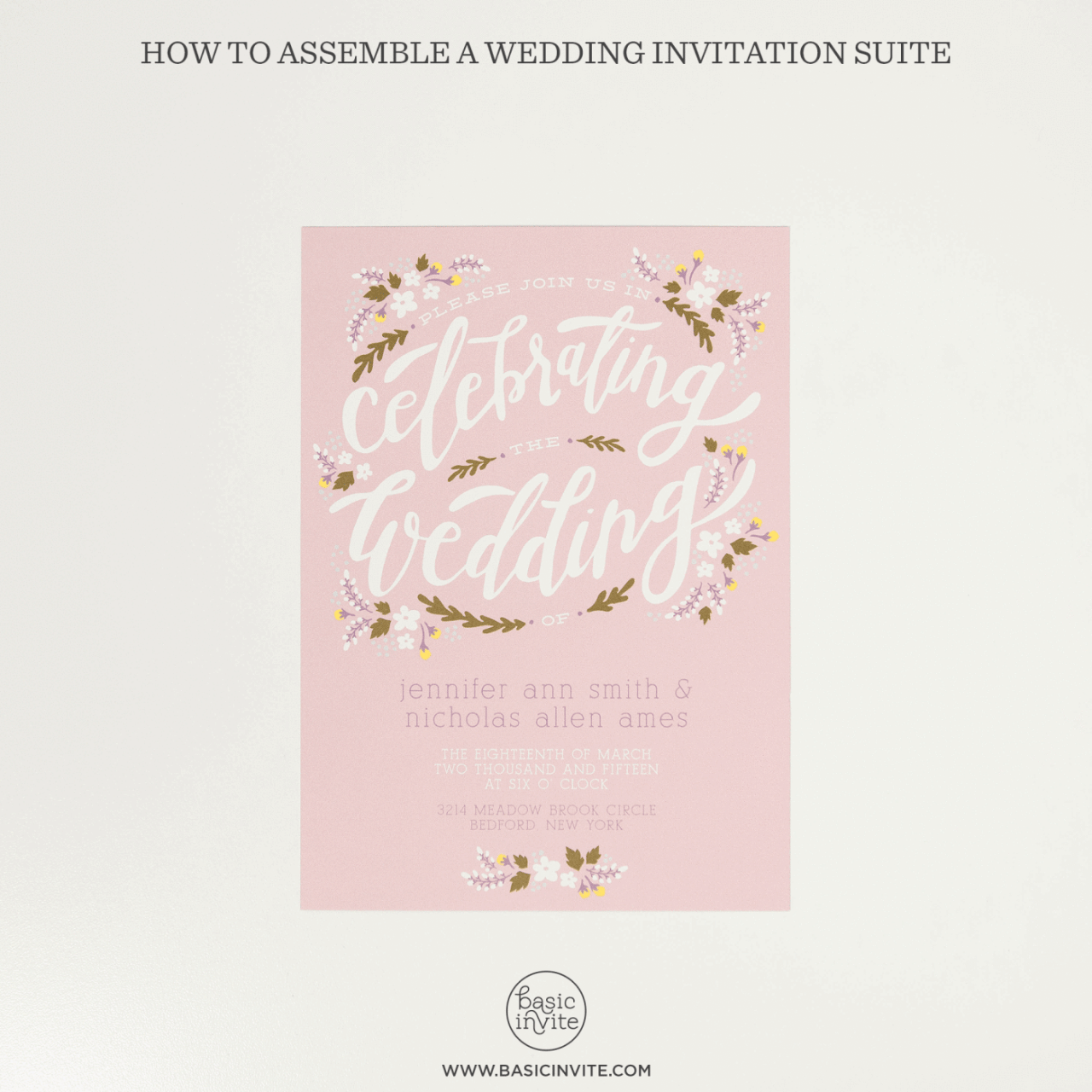
Before you can begin the satisfying process of assembling your invitations, it’s crucial to have all the essential components readily available. This preparation ensures a smooth workflow and prevents any last-minute rushes or omissions. A well-prepared station will make the entire assembly a delightful experience, allowing you to focus on the details that make your invitations special.The foundation of your invitation assembly lies in the stationery itself.
This includes the invitation cards, any insert cards (such as RSVP cards or reception details), and of course, the envelopes. Ensuring you have the correct quantities of each, plus a few extras for any potential errors, is a wise first step.
Invitation Stationery Components
The core of your invitation suite comprises the invitation card and any accompanying inserts. The invitation card is typically the largest piece, containing the primary event details. Insert cards provide supplementary information and are often smaller. It is important to select cardstock that aligns with the formality and style of your event. For a more elegant feel, consider heavier weight cardstock with a smooth or textured finish.
- Invitation Cards: These are the main announcement pieces. They come in various sizes, with common dimensions being 5×7 inches or A7 size.
- Insert Cards: These smaller cards can include details about the RSVP, directions, accommodation information, or wedding websites. Their sizes vary depending on the information they contain, often fitting within the main envelope alongside the invitation.
- RSVP Cards: A dedicated card for guests to respond to your invitation. These are usually accompanied by a pre-addressed and stamped return envelope or a pre-paid postcard.
Envelope Selection
Choosing the right envelope is paramount for both the aesthetic appeal and the safe transit of your invitations. The size and weight of your invitation suite will dictate the appropriate envelope dimensions to ensure everything fits comfortably without being too cramped or too loose.
- Standard Sizes: Common envelope sizes for invitations include A7 (5.25 x 7.25 inches) for 5×7 inch invitations, and A9 (5.75 x 8.75 inches) for larger or multi-piece suites.
- Weight and Quality: Envelope weight, often measured in pounds (e.g., 70lb, 80lb, 100lb), indicates the thickness and durability of the paper. Higher pound weights generally suggest better quality and opacity, preventing the contents from showing through.
- Liner Options: Many envelopes offer optional liners, which can add a significant decorative touch. Liners can be plain, patterned, or even metallic, complementing the overall design of your invitation.
- Addressing Considerations: Ensure the envelope size accommodates your chosen addressing method, whether it’s handwriting, calligraphy, or printing.
Adhesive Choices
Securing the various components of your invitation suite requires an adhesive that is both effective and unobtrusive. The goal is to ensure that inserts stay in place and that the invitation closes neatly without damaging the paper.
- Double-Sided Tape: This is a clean and easy-to-use option for adhering inserts to the main invitation or for securing envelope liners. It provides a strong bond without visible residue.
- Glue Sticks: A good quality glue stick can be effective for lightly adhering smaller inserts, but care must be taken to apply an even layer to avoid rippling the paper.
- Adhesive Dots or Squares: These offer precise application and a strong hold, ideal for attaching embellishments or securing card layers.
- Wax Seals: For a classic and elegant touch, wax seals can be used to close envelopes. This requires a wax seal stamp and sealing wax, applied carefully to the flap.
Optional Embellishments
While not strictly necessary, embellishments can elevate your invitations from simple stationery to a memorable keepsake. These decorative elements add personality and a unique flair to your assembled invitations, making them stand out.
- Ribbons and Bows: A satin, grosgrain, or velvet ribbon can be tied around the invitation suite for a touch of elegance.
- Belly Bands: A decorative band of paper or cardstock wrapped around the invitation suite to keep all the pieces together and add a design element.
- Seals and Stickers: Custom stickers or embossed seals can be used to close envelopes or add a decorative accent to the invitation itself.
- Glitter or Rhinestones: Small amounts of glitter or strategically placed rhinestones can add sparkle and sophistication.
- Washi Tape: Decorative tapes can be used to secure inserts or add a patterned border.
Preparing Your Invitation Suite
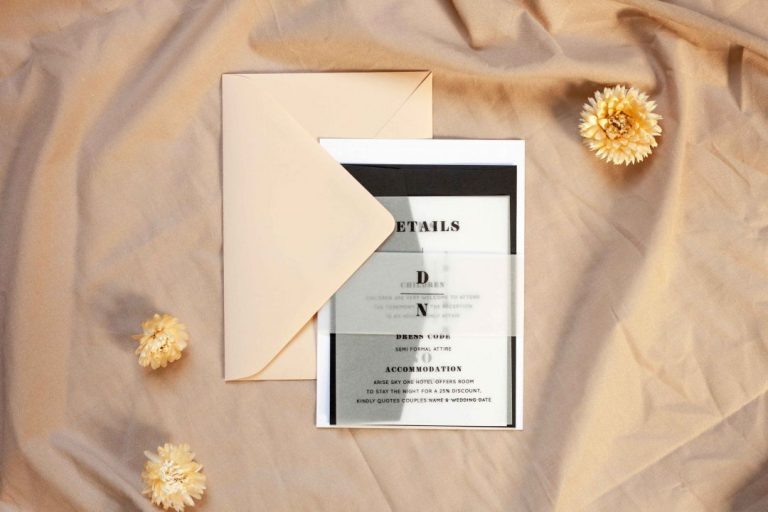
With all your materials gathered, the next crucial step is to meticulously prepare each component of your invitation suite. This ensures a polished and professional presentation for your guests, setting the right tone for your event. Careful organization and attention to detail at this stage will make the assembly process smooth and efficient.This section will guide you through the process of organizing the various elements of your invitation, addressing envelopes with care, and neatly assembling everything.
A well-prepared suite reflects the thoughtfulness you’ve put into your event.
Organizing Invitation Components
Before you begin assembling, it is essential to have a clear system for organizing each piece of your invitation suite. This prevents confusion and ensures that no element is misplaced or overlooked. A logical arrangement will streamline the entire process.Your invitation suite typically includes several key components:
- Invitation Card: The main announcement of your event.
- RSVP Card: A separate card for guests to respond to your invitation.
- Details Card: This card provides additional information such as directions, accommodation suggestions, dress code, or a wedding website URL.
- Envelopes: One for the invitation to be mailed to the guest, and often a smaller one for the RSVP card to be returned.
- Inner Envelope (Optional): Used for more formal invitations, this smaller envelope contains the invitation suite and is placed inside the main outer envelope.
It is helpful to group these items by their function. For instance, gather all invitation cards together, all RSVP cards together, and so on. You might consider using small trays or dividers to keep these distinct stacks separate and organized on your workspace.
Addressing Envelopes
The way you address your envelopes is the first impression your guests will have of your invitation. Whether you choose a personal touch or a more formal approach, clarity and neatness are paramount.Here are several popular methods for addressing envelopes:
- Handwriting: This offers a personal and charming touch. Ensure you use a consistent, legible script. Practice on scrap envelopes first to perfect your style and ensure your ink doesn’t smudge. Use a high-quality pen that flows smoothly.
- Printing Labels: For a more uniform and efficient approach, printing address labels is an excellent option. Many design software programs allow you to create and print custom labels that match your invitation’s aesthetic. Ensure your printer is calibrated correctly for accurate alignment.
- Calligraphy: This is the most formal and elegant option, adding a sophisticated flair. You can hire a professional calligrapher for a truly bespoke look, or if you have a steady hand, you can explore self-taught calligraphy.
Regardless of the method chosen, ensure all addresses are accurate and complete, including zip codes. Double-check for any typos before you begin addressing the final envelopes.
Folding and Inserting Invitation Cards
The careful folding and insertion of your invitation cards into their envelopes are critical for a professional and tidy presentation. A well-assembled invitation looks sophisticated and ensures all components arrive intact.Techniques for neat folding and insertion include:
- Pre-folding: If your invitation card is designed to be folded, gently crease it along the designated fold lines. Use a bone folder or the edge of a ruler to create sharp, clean folds.
- Layering: For suites with multiple cards, the typical order of insertion into the outer envelope is: RSVP card (face up, stamp at the top right), then the details card, and finally the main invitation card (face up, often placed at the bottom or slightly above the center).
- Centering: Ensure the invitation card is centered within the envelope before sealing. This creates a visually pleasing and balanced look.
- Securing: If you are using an inner envelope, the entire suite is placed inside this smaller envelope. The inner envelope is then placed into the outer envelope, with the addresses facing the recipient.
Avoid overstuffing the envelope, as this can cause damage during mailing. If your suite is particularly thick, consider using a larger envelope or sending it as a package.
Invitation Suite Checklist
To guarantee that your invitation assembly is complete and accurate, utilize a checklist. This systematic approach ensures no component is missed and that each guest receives a full and correct invitation suite.Before you begin sealing envelopes, please verify that each suite includes the following:
- Invitation Card
- RSVP Card
- Details Card (if applicable)
- Return RSVP Envelope (pre-addressed and stamped)
- Outer Mailing Envelope (addressed and stamped)
You may wish to create a master list and then check off each item for every invitation you assemble. This is particularly helpful for larger guest lists.
Assembly Techniques and Tips
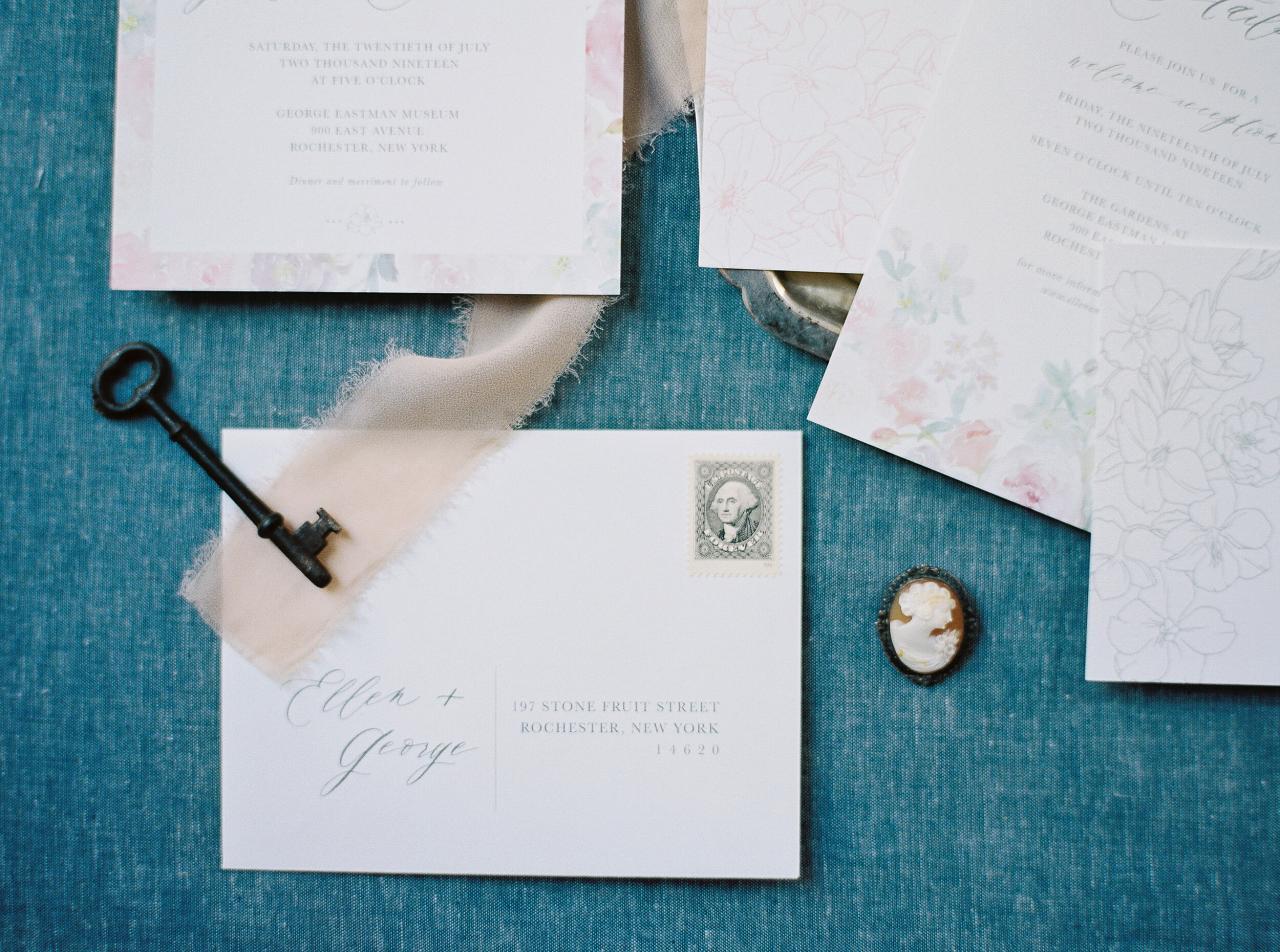
Once you have gathered all your beautiful invitation components and prepared them, the next crucial step is bringing them all together seamlessly. This section will guide you through the art of assembling your multi-piece invitation suite, ensuring each element is placed thoughtfully and securely. We will explore various methods for attaching inserts, discuss the best ways to seal your envelopes, and provide tips for achieving a consistently professional and polished final presentation.The careful assembly of your invitations not only protects the individual pieces during transit but also creates an immediate impression of quality and attention to detail for your guests.
A well-assembled invitation suite hints at the significance of the event it represents.
Attaching Multiple Cards or Inserts
Effectively organizing and securing multiple inserts within an invitation is key to a cohesive and elegant presentation. The method chosen should complement the style of your suite and ensure that each piece is visible and accessible to the recipient.Here are several methods for attaching multiple cards or inserts:
- Pocket Folds: These pre-designed envelopes feature an internal pocket, typically on one side, where smaller cards like RSVP, reception, or details cards can be neatly tucked. This is a very popular and sophisticated method that keeps all pieces together without adhesives that might mar the stationery.
- Belly Bands: A decorative band of paper or ribbon that wraps around the entire invitation suite, holding all the cards in place. Belly bands can be printed with your names, event details, or a decorative motif, adding an extra layer of personalization and visual appeal.
- Ribbon or Twine: Tying the invitation suite together with a ribbon or twine is a charming and rustic approach. You can either tie a bow around the stack of cards or thread the ribbon through pre-punched holes in the cards for a more secure and decorative binding.
- Adhesive Dots or Tape Runner: For a more permanent attachment, small, discreet adhesive dots or a tape runner can be used to secure inserts to the main invitation card. It is essential to use acid-free and photo-safe adhesives to prevent damage or discoloration over time. Apply these sparingly to the back of the insert card, ensuring they do not bleed through or leave unsightly marks.
- Die-Cut Slots: Some invitation designs incorporate die-cut slots within the main invitation card itself, specifically designed to hold smaller inserts securely. This method is elegant and ensures that each card has its designated place.
Sealing Envelopes Securely
Ensuring your invitations are sealed properly is vital to prevent them from opening during mailing and to maintain the integrity of your carefully assembled contents. The chosen method should be reliable and avoid damaging the stationery.Consider these approaches for sealing envelopes:
- Moisten-and-Seal: This is the most traditional method, involving moistening the adhesive strip on the envelope flap. For best results, use a sponge or a dedicated envelope moistener. Avoid over-wetting, which can cause the paper to warp or the ink to smudge. Press the flap down firmly and hold for a few seconds to ensure a good seal.
- Self-Adhesive Envelopes: Many modern envelopes come with a self-adhesive strip that is activated by peeling off a protective backing. This method is convenient and generally creates a strong seal. Ensure the surface is clean and dry before pressing the flap down to achieve optimal adhesion.
- Envelope Seals or Stickers: For added security or decorative flair, you can use wax seals or decorative stickers over the sealed flap. This not only reinforces the seal but also adds a personalized touch. Ensure the adhesive on the seal or sticker is strong enough to hold the flap securely.
- Double-Sided Tape (External Reinforcement): In cases where extra security is desired, particularly for heavier invitation suites, a discreet strip of double-sided tape can be applied along the edge of the envelope flap before sealing. This provides an additional layer of adhesion.
A secure seal protects your invitation from the rigors of the postal service and conveys a sense of care and professionalism to your guests.
Ensuring a Professional and Polished Final Presentation
The final presentation of your assembled invitations is the first tangible interaction your guests will have with your event. Achieving a professional and polished look requires attention to detail at every stage of the assembly process.Best practices for a superior final presentation include:
- Consistent Alignment: Ensure all inserts are aligned neatly within the invitation suite, whether they are tucked into a pocket, held by a belly band, or adhered. Misaligned pieces can detract from the overall aesthetic.
- Clean Handling: Always handle your invitations with clean hands to avoid fingerprints or smudges, especially on delicate paper or dark ink. Consider using white cotton gloves for the final assembly stages if you are particularly concerned about pristine presentation.
- Proper Insert Placement: Position inserts thoughtfully. For instance, the RSVP card is often placed on top of other inserts for easy visibility, or tucked into a designated pocket.
- Uniform Folding and Creasing: If your invitations involve folding, ensure all folds are crisp and uniform. A ruler and a bone folder can help achieve sharp, professional creases.
- Envelope Honesty: Before sealing, give each envelope a final visual check. Ensure there are no stray marks, smudges, or visible adhesive failures.
- Addressing Elegance: While addressing is part of mailing, the neatness and legibility of your addressing contribute significantly to the final impression. Whether handwritten, calligraphed, or printed labels, ensure they are applied straight and centered.
Step-by-Step Guide for Assembling a Multi-Piece Invitation Set
This guide Artikels a common scenario for assembling a multi-piece invitation set, such as a main invitation card, an RSVP card with a return envelope, and a details card, often presented in a pocket fold.Follow these steps for a structured assembly:
- Prepare Your Workspace: Clear a large, flat surface. Have all your invitation components (main invitation, inserts, RSVP card, return envelope, pocket fold, belly band/ribbon if applicable) and any necessary adhesives or tools readily accessible.
- Organize Inserts: If using a pocket fold, begin by arranging your smaller insert cards in the desired order. Typically, the RSVP card is placed on top, followed by the details card, and then any other supplementary information.
- Insert into Pocket: Carefully slide the organized stack of insert cards into the pocket of the pocket fold. Ensure they sit flat and do not protrude beyond the edges of the pocket.
- Place Main Invitation: Position the main invitation card on top of the pocket fold, or as per your specific design. If they are to be attached, use adhesive dots or a tape runner on the back of the main invitation card and press it onto the pocket fold. Ensure it is centered and aligned correctly.
- Secure with Belly Band or Ribbon: If using a belly band, slide it around the assembled invitation suite, ensuring it is snug and straight. If using ribbon or twine, tie it securely around the suite, finishing with a neat bow or knot.
- Address and Prepare Return Envelope: Write or affix the recipient’s address on the RSVP return envelope. Ensure postage is applied to the return envelope.
- Place in Outer Envelope: Carefully slide the fully assembled invitation suite into the outer mailing envelope. The main invitation card should typically face upwards.
- Seal the Outer Envelope: Use your chosen sealing method (moisten-and-seal, self-adhesive, etc.) to securely close the outer envelope.
- Final Inspection: Before mailing, hold each invitation up to the light and give it a thorough visual inspection. Check for any imperfections, ensure all components are secure, and confirm the envelope is properly sealed.
Mailing Your Invitations
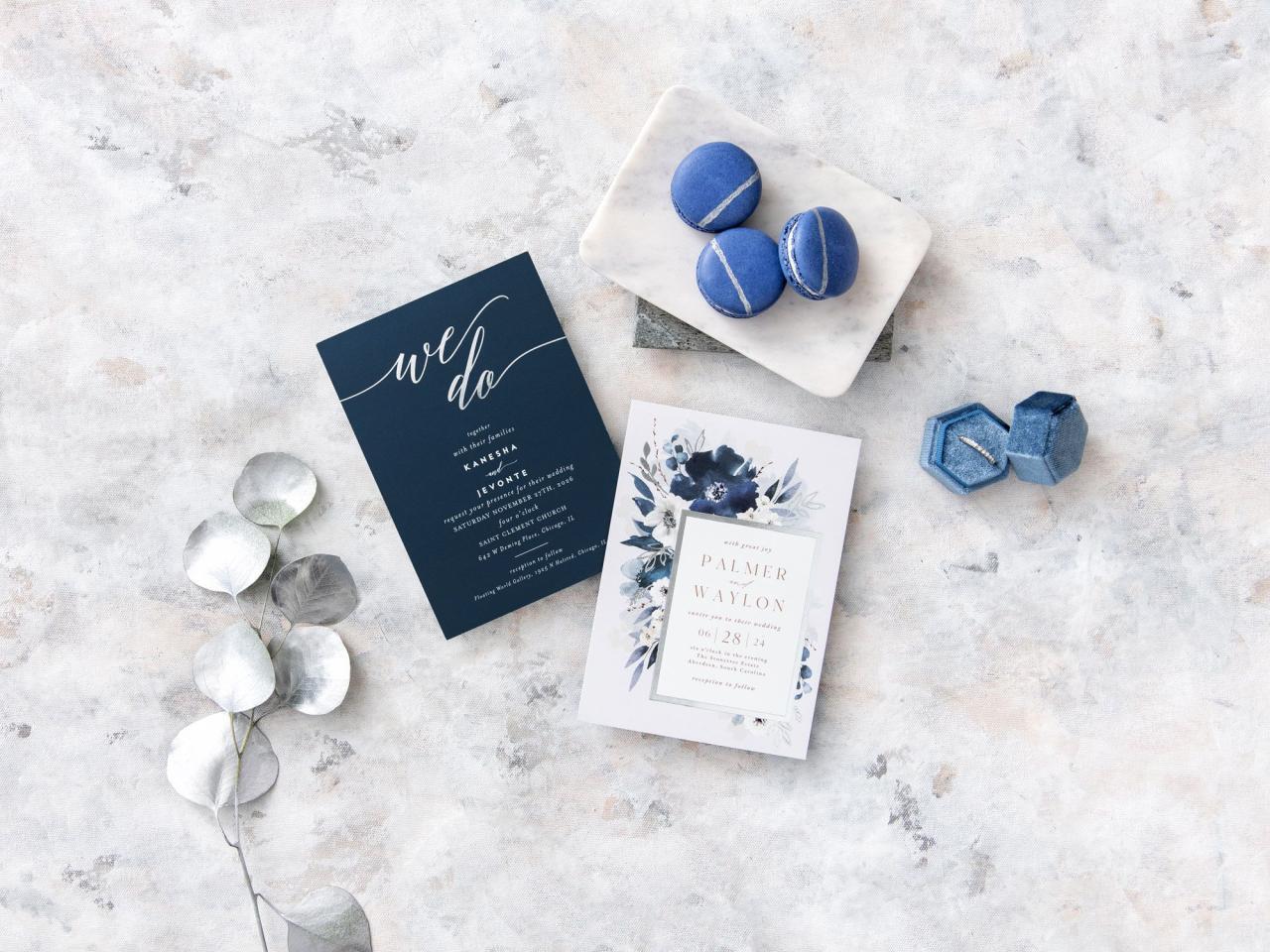
With your beautiful invitations meticulously assembled, the next crucial step is ensuring they reach your guests safely and on time. This section will guide you through the process of selecting the right mailing services, determining accurate postage, preparing your invitations for their journey, and establishing a clear timeline for mailing. A well-executed mailing plan is key to a stress-free event.
Mailing Services and Delivery Times
Understanding the various mailing services available will help you choose the most suitable option based on your budget, the urgency of delivery, and the reliability you require. Each service offers different speeds and price points, and it’s beneficial to be aware of these distinctions.
- United States Postal Service (USPS): This is the most common and often most economical option for domestic mail.
- First-Class Mail: Ideal for standard invitations, this service typically delivers within 1-5 business days for domestic destinations. Costs are based on weight and size, starting with the price of a standard stamp for a letter-sized envelope.
- USPS Marketing Mail (formerly Standard Mail): While cheaper, this service is significantly slower, with delivery times ranging from 3-10 business days or more, and is generally not recommended for time-sensitive invitations due to its lower priority.
- Priority Mail and Priority Mail Express: These expedited services offer faster delivery, typically 1-3 business days for Priority Mail and overnight to 2-day for Priority Mail Express, with tracking included. They are more expensive but provide greater peace of mind for important mailings.
- Private Carriers (e.g., FedEx, UPS): These services offer a wider range of options, including guaranteed delivery times and extensive tracking capabilities. They are generally more expensive than USPS but can be valuable for international invitations or when absolute certainty of delivery by a specific date is paramount. Costs vary widely based on speed, distance, and package weight.
Determining Correct Postage
Accurately calculating postage is essential to avoid returned mail or additional charges. Several factors influence the cost, including the weight, size, and destination of your invitation.
“The cost of postage is determined by the weight, dimensions, and destination of the mailpiece.”
Here’s how to ensure you have the correct postage:
- Weigh Your Invitation: Use a kitchen scale to weigh a fully assembled invitation, including all inserts and the envelope. This is the most critical step, as even a few extra ounces can significantly increase postage costs. For example, a standard 1-ounce First-Class Mail stamp covers up to 1 ounce. An invitation weighing 1.5 ounces will require additional postage.
- Measure Your Envelope: Standard letter-sized envelopes (up to 6 1/8″ x 11 1/2″) that are rectangular and not too thick are generally eligible for standard letter postage. Non-standard sizes (square, oversized, or very thick envelopes) may be subject to a surcharge or require package pricing.
- Consider Additional Services: If your invitation includes items that make it rigid or bulky (e.g., ribbons, wax seals that protrude), it may be classified as a “non-machinable” item, incurring an additional fee.
- Use a Postage Calculator: Most postal services, including USPS, have online postage calculators where you can input the weight, dimensions, and destination to get an accurate postage estimate.
- Visit the Post Office: For complete certainty, especially with unique or heavy invitations, take a fully assembled invitation to your local post office. A postal clerk can weigh and measure it precisely and advise you on the exact postage required.
For a typical wedding invitation suite weighing around 2 ounces, you might expect to pay the cost of a standard stamp plus an additional ounce postage, often around $0.65-$0.85 for domestic First-Class Mail, depending on current rates. Oversized or square invitations can easily double or triple this cost.
Preparing Invitations for Mailing
Protecting your invitations during transit is vital to ensure they arrive in pristine condition, reflecting the care you put into their creation.
- Secure Inserts: Ensure all enclosure cards, RSVP cards, and other inserts are neatly placed within the main invitation and the envelope. If they tend to shift, a small, acid-free sticker or a carefully folded piece of tissue paper can keep them in place without causing damage.
- Seal Envelopes Properly: Use the adhesive on the envelope flap. For added security, especially for important events, you can use a moisture-activated adhesive or a decorative envelope seal. Avoid using excessive tape, as it can sometimes cause issues with postal machinery.
- Use Sturdy Envelopes: Opt for high-quality envelopes that are not too thin. This provides a good initial layer of protection against tears and punctures.
- Consider Outer Envelopes or Mailers: For particularly delicate or elaborate invitations, consider using a second, more robust outer envelope or a padded mailer. This adds an extra layer of protection against bending and crushing.
- Address Clearly and Correctly: Ensure addresses are legible and correctly formatted, using a pen with permanent ink or a high-quality printer. Smudged or incorrect addresses are a primary cause of mail being lost or returned.
Mailing Timeline
Establishing a clear timeline for assembling and mailing your invitations is crucial for your guests to receive them with ample time to respond and make arrangements. This timeline should be coordinated with your overall event planning schedule.
“Send invitations out 6-8 weeks before the event for most occasions, and 8-12 weeks for destination weddings or when many guests are traveling.”
Here is a general guideline for a wedding invitation timeline:
- 10-12 Weeks Before Event: Assemble Invitations. This allows ample time to address envelopes, assemble all components, and prepare them for mailing without feeling rushed.
- 8-10 Weeks Before Event: Mail Invitations. This is the standard window for sending out wedding invitations. It gives guests sufficient time to plan, book travel, and arrange for childcare if needed.
- 4-6 Weeks Before Event: RSVP Deadline. Set your RSVP deadline for this period to allow you time to follow up with any guests who haven’t responded and to finalize your guest count with vendors.
For other events, such as birthday parties, anniversaries, or formal dinner parties, a timeline of 3-4 weeks before the event for mailing is usually sufficient. Always factor in the time it takes for guests to receive the invitation, for them to respond, and for you to receive those responses.
Troubleshooting Common Issues
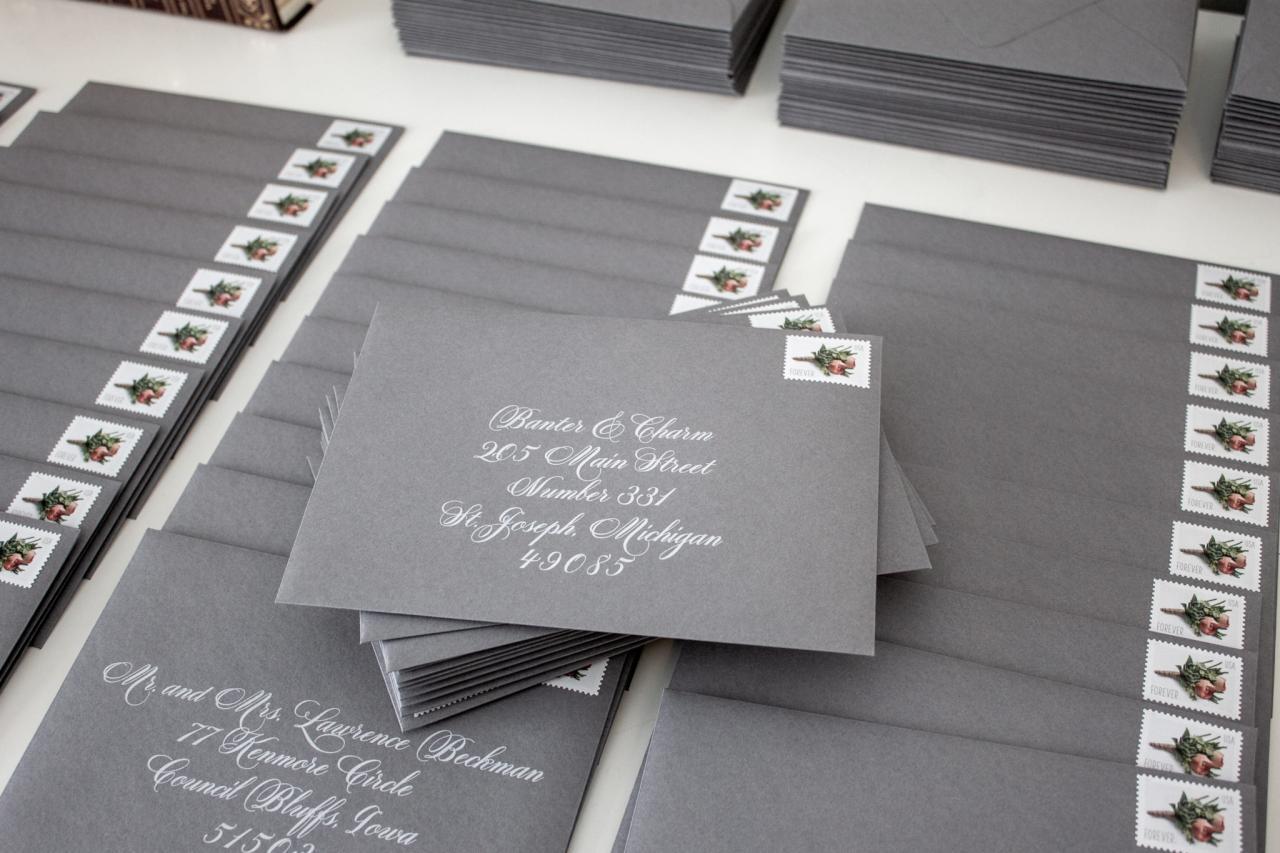
Even with careful planning and execution, unexpected challenges can arise during invitation assembly and mailing. Addressing these issues promptly and efficiently will ensure your guests receive their invitations in perfect condition and on time. This section provides solutions to common problems encountered during the process.
Addressing Assembly Errors
Mistakes can happen during the assembly of invitation suites, from misfolded inserts to smudged calligraphy. Having a plan for correction minimizes stress and ensures a professional final product.It is crucial to maintain a small surplus of all invitation components to account for such errors. This allows for seamless replacement without compromising the overall quantity needed.
Handling Returned Mail
Invitations returned by the postal service typically indicate an incorrect address or insufficient postage. Swift action is necessary to rectify the situation and ensure the intended recipient still receives the invitation.
Common reasons for returned mail include:
- Incorrect Address: A typo in the street name, number, or zip code.
- Undeliverable Address: The address may no longer be valid or the recipient has moved without leaving a forwarding order.
- Insufficient Postage: The invitation package exceeded the weight or size limits for the postage paid, or postage rates have increased since initial calculation.
- No Forwarding Address: The recipient has moved and not provided a forwarding address with the postal service.
When an invitation is returned, follow these steps:
- Verify the Address: Double-check the original address provided against reliable sources, such as your guest list or a quick online search.
- Correct the Address: If an error is found, carefully correct it on a new envelope.
- Re-postage: Weigh the invitation suite again to determine the correct postage. Ensure sufficient postage is applied to avoid a second return.
- Re-mail Promptly: Send the corrected invitation as soon as possible to minimize any further delays.
Strategies for Re-mailing Invitations with Errors
Should you discover an error on an assembled invitation before it is mailed, or if an invitation is returned, a systematic approach to re-mailing is essential. This ensures that the corrected invitation reaches the guest without further complications.
When re-mailing corrected invitations, consider the following strategies:
- Envelope Errors: If only the envelope is incorrect, you can often remove it and re-address a new envelope. Ensure the invitation suite inside remains pristine.
- Invitation Suite Errors: If an error is found within the invitation suite itself (e.g., a typo in the date or time), it is best to reprint the affected component or the entire suite if the error is significant. Then, reassemble the corrected suite.
- Guest Communication: For critical errors discovered close to the mailing date, or for important guests, a direct phone call or email to inform them of the correction can be a courteous and effective measure.
Ensuring Longevity of Assembled Invitations
The period between assembling your invitations and mailing them can sometimes be a few days or even weeks, especially for large events. Proper storage is key to maintaining their pristine condition.
To ensure the longevity of assembled invitations before mailing:
- Store in a Cool, Dry Place: Avoid areas with high humidity or extreme temperatures, which can cause paper to warp or ink to smudge. A climate-controlled room is ideal.
- Use Original Packaging or Protective Sleeves: If your invitations came with protective sleeves or boxes, utilize them for storage. Otherwise, consider using acid-free tissue paper or archival-quality boxes.
- Stack Carefully: If stacking multiple invitations, ensure they are stacked flat and evenly to prevent bending or creasing. Avoid placing heavy objects on top of them.
- Handle with Care: When moving or handling the assembled invitations, always use clean hands or cotton gloves to avoid transferring oils or dirt to the paper surfaces.
End of Discussion
By following this guide, you will have successfully navigated the intricacies of assembling and mailing your invitations, resulting in a professional and memorable presentation. You’ve learned to gather your materials, prepare your suite with precision, employ effective assembly techniques, address with care, and mail with certainty, all while being prepared for any unexpected hurdles. Your beautifully prepared invitations are now ready to convey your important message, leaving a lasting positive impression on every recipient.